Social media helps local brands when it behaves like a neighborhood signal, not a broadcast blast.
The useful goal is not raw volume. It is recognition, trust, and repeated contact with people who can actually buy, visit, or refer the business. That means choosing the right platforms, posting with discipline, and treating every comment, tag, and direct message as part of the brand record.
1. Start With The Right Platforms
Local brands do not need to be everywhere. They need to be visible where their customers already spend time. The broad platform mix in the United States still favors Facebook and YouTube at scale, with Instagram also widely used, which is why platform choice should follow audience behavior instead of habit. A current snapshot from the Pew Research Center social media fact sheet is a sensible place to check how the audience actually breaks down.
For many local brands, the practical starting point looks like this:
| Platform | Best local use | What to post |
|---|---|---|
| Community reach, groups, events, reviews | Promotions, event reminders, service updates, local offers | |
| Visual proof and daily brand texture | Reels, Stories, behind-the-scenes work, testimonials, product photos | |
| Professional credibility and B2B relationships | Case studies, hiring updates, team expertise, project highlights | |
| X or Threads | Fast updates and short-form commentary | Event notes, timely announcements, customer support responses |
If Instagram is part of the plan, the official Instagram for Business guide is a practical reference for using the platform to reach new customers and keep current ones engaged. The point is not to copy the guide line by line. The point is to understand what the platform is built to reward.
A good rule is simple: one or two platforms done well will usually outperform four neglected accounts. A dead feed tells visitors the business is inattentive. That is not a message most local brands want to send.
2. Build Engagement Around The Local Community
Local engagement works when the content feels specific to the place, the season, and the customer’s immediate problem. General brand language can be useful, but local proof is what makes the feed feel alive. That is the difference between a generic account and a business people recognize from down the street.
- Use local references: mention neighborhoods, town events, school schedules, weather shifts, and seasonal routines when they are relevant.
- Show real work: behind-the-scenes photos and short videos make the service feel tangible.
- Reuse customer proof: testimonials, tagged posts, and user-generated content reduce friction because people trust what other locals already shared.
- Respond quickly: comments and direct messages should be treated like front-counter interactions, not optional admin.
- Run simple local offers: limited-time promotions, event giveaways, and neighborhood partnerships work best when they are easy to understand in one glance.
For small teams, the practical guidance in Hootsuite’s small business social media guide is worth reading because it stays close to the work: picking a channel, choosing a cadence, and keeping the brand voice consistent when time is tight. A more operational view from Buffer’s scheduling tools guide also helps when the real problem is not creativity but staying on schedule.
That schedule matters. Brands that disappear for six weeks and then return with a burst of sales posts teach followers to ignore them. Consistency is not decorative. It is the baseline.
Teams that need a lightweight internal dashboard for approvals, deadlines, and reporting sometimes use a web app generator to prototype the workflow before committing to custom code. The tool only matters if it reduces handoff friction. Otherwise it is just another tab to keep open.
3. Case Studies And Field Examples
The strongest social plans are not built on theory alone. They are shaped by examples that show what changes when a business posts with intention.
| Brand | Strategy | Result | Lesson |
|---|---|---|---|
| Apricotton | Customized content, paid ads, and analytics | 108% increase in sales, 66,000 impressions in two weeks, and 8 hours saved each week through analytics | Clear content plus measurement can turn social from noise into revenue support |
| The Gym Group | Centralized social management across local locations | Activated more than 240 local gyms in five months while improving community engagement and brand control | Local branches perform better when the brand gives them a shared system |
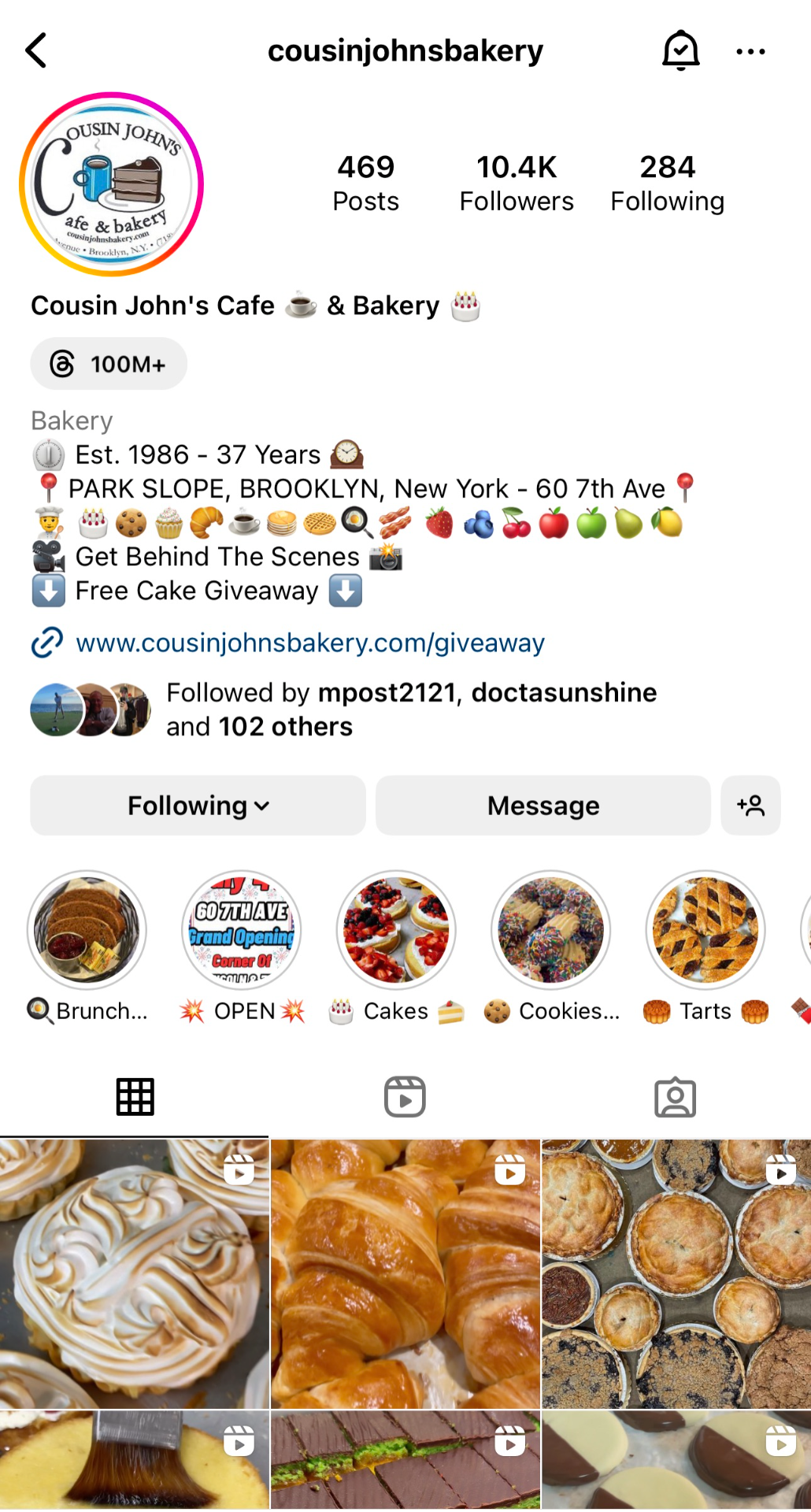
| Cousin John’s Cafe & Bakery | Visible profile, regular posting, location cues, and a clear link-in-bio path | The profile shows a high post count and a large follower base, which signals consistency and audience familiarity | A local brand wins trust faster when the feed answers basic questions at a glance |
The Apricotton case shows what happens when content, ads, and analytics are aligned. Hootsuite’s own case study describes a small business that used those pieces together to produce meaningful sales growth and time savings. The Gym Group case shows the other side of the problem: when a brand has many locations, local engagement needs a shared system or the message fragments. Hootsuite’s resource library includes both examples.
The bakery profile in the lead image is a simpler lesson. The account makes the business easy to identify, shows that it is active, and gives visitors enough proof to decide whether to keep looking. That is a small thing until it is not. Many local brands lose attention because their profile never makes the next step obvious.
4. Manage The Work Like A System
Social media gets expensive when it is managed like a series of last-minute posts. It becomes cheaper and steadier when the process is treated like an operating routine.
- Use a content calendar: plan a week or month at a time so the team can batch write, design, and review.
- Schedule repeatable posts: use tools for publish timing so the team can focus on engagement instead of constant uploading.
- Track a small set of metrics: reach, engagement, profile visits, link clicks, and inquiries are usually enough to start.
- Review the comments: unanswered questions and slow replies are visible failure modes.
- Document one recovery path: if the account is hacked, a post goes wrong, or a campaign underperforms, the team should know what happens next.
That is where analytics matter. They tell you whether the posts are creating conversation, visits, and inquiries, or just producing activity. A business does not need more activity. It needs the right kind of activity.
For teams that want to deepen the operational side, Hootsuite’s guidance on which social media metrics matter most is a good reminder that reports should point to decisions, not just display numbers. Count what affects trust, reach, and conversion. Everything else is background noise.
5. Conclusion
Local brands do not need a louder voice. They need a clearer one. That means choosing the right platforms, posting with consistency, showing real community presence, and using tools that keep the work orderly instead of chaotic.
If you want a practical next step, review your current profiles and ask three questions: does the account show who you are, does it prove that you are active, and does it make it easy for a local customer to take the next step? If the answer is no, the strategy needs work before the next post goes live.
For deeper support, the services page outlines the kinds of help available, and the about page gives more context on the team behind the work. Social media performs better when it is part of a broader, well-managed brand system.